
Our Insights
Accelerating AI implementation in Transportation industry: Key takeaways from the National DOT AI Peer Exchange
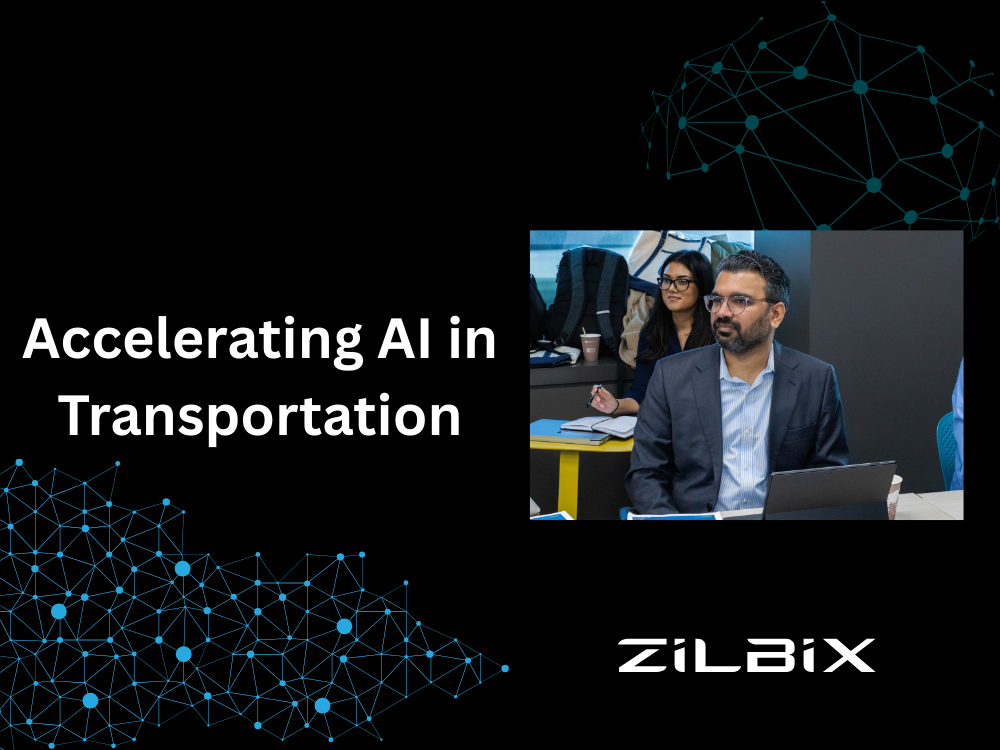
Zilbix was invited to participate in the second National DOT AI Peer Exchange hosted by MassDOT in Boston. The event brought together 14 state Departments of Transportation (DOTs), American Association of State Highway and Transportation Officials (AASHTO), Transportation Research Board (TRB), and Federal Highway Administration (FHWA). The event also included Northeastern University and private sector partners including Zilbix to explore the future of AI in transportation.
During the “Use Cases from Other Sectors” session, Jay Bhinde had the opportunity to share cross-industry AI use cases and engage in rich discussions with attendees on the evolving AI landscape.
Key themes from the National DOT AI Peer Exchange
- AI Use Case Implementation Across DOTs
Some DOTs have successfully deployed AI solutions such as public-facing virtual assistants. However, many DOTs are still in the early stages of piloting use cases. In addition, promising areas for AI impact include the following areas:
– Asset management
– Roadway safety
– Fleet management
– Traffic operations
– Coding assistance
– Invoice processing
– Chatbot support - Data readiness is crucial for AI implementation
The data quality and readiness at DOTs remains a major hurdle. 65% of surveyed participants reported operating under federated governance models with limited AI coordination. As a result, breaking down data silos and improving data governance are critical. Inter-agency collaboration at the national level will be critical to unlocking AI’s full potential. - Human-in-the-loop is essential for trustworthy AI
DOTs emphasized that AI should augment and not replace human expertise. The oversight and transparency of processes automated will be key to ensuring trust and accuracy. Models trained on curated, domain-specific datasets such as Small Language Models (SLMs) will be more sustainable and transparent path forward. - Procurement innovation is needed to keep pace with AI
The traditional procurement processes often lag behind the speed of AI innovation. Moving forward, DOTs emphasized the need for more agile and flexible procurement pathways. Several states shared successful strategies, including:
– Leveraging innovative procurement exceptions
– Establishing expedited tracks for AI initiatives
Actionable steps discussed to accelerate AI progress at DOTs
- Pooled Fund Study
New Jersey DOT volunteered to lead the first pooled fund study with support from FHWA. This initiative aims to:
– Funding continued convening of state DOTs
– Supporting the development of national strategic process
– Enabling pilot projects for shared use cases, and
– Creating shared resources (e.g., data and workforce training) - National Strategic AI Framework
DOTs agreed to co-develop a unified national AI framework drawing from existing State strategies (such as Texas, California, Utah, Minnesota), academic research, and private sector innovation. - Knowledge Sharing Infrastructure
There is strong momentum to build a collaborative ecosystem to develop knowledge sharing infrastructure. DOTs discussed to develop shared infrastructure in:
– Data and code repositories
– Application frameworks
– Procurement strategies
– Risk assessment frameworks
Session resources
About the Author
Jay Bhinde is the Founder & CEO of Zilbix, a management consulting firm focused on Business, AI, and Digital Transformation. Connect with Zilbix on LinkedIn to continue the conversation.